Dr.-Ing. Robert Richer
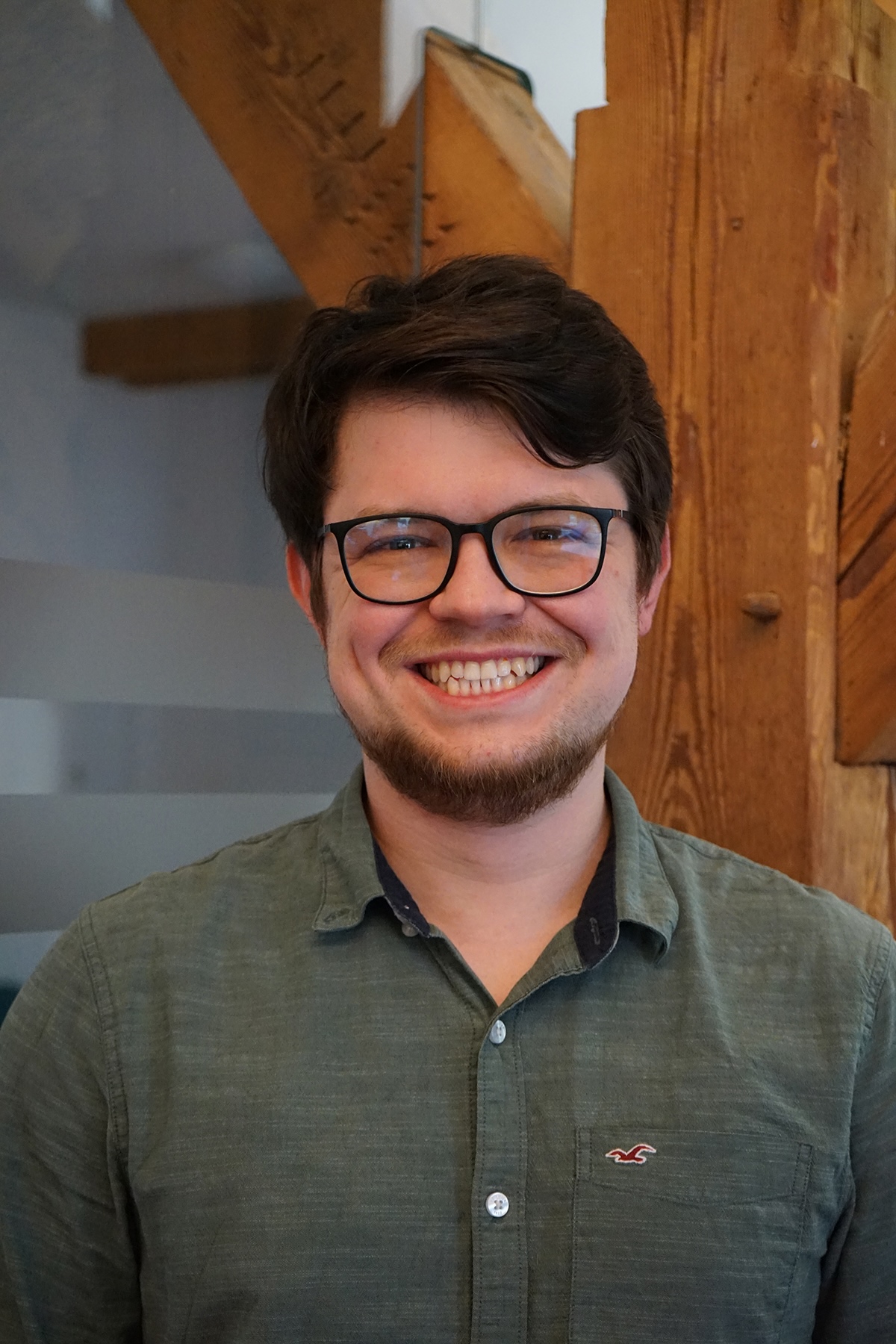
I am a postdoctoral researcher and research group leader at FAU Erlangen-Nürnberg, working at the interface of digital health, psychology, biomedical engineering, and artificial intelligence.
My research focuses on sensor-driven assessment of different facets of human health and behavior. I am particularly interested in digital biomarkers and contactless psychophysiological sensing in real-world settings, as well as open-source infrastructures and computational tools that help make digital health research more scalable, transparent, reproducible, and clinically meaningful.
You can find more about my publications, projects, software, and group on the dedicated subpages.
Research
My research program is centered around the following themes:
- Digital health and stress research: wearable, mobile, and ubiquitous technologies for biopsychological stress assessment in laboratory settings and in everyday life.
- Contactless psychophysiological sensing: multimodal contactless sensing for unobtrusive monitoring of physiological and behavioral signals, with a focus on video-, thermal imaging-, audio-, and radar-based methods.
- Biomedical machine learning: robust computational methods for physiological, behavioral, and health-related sensor data.
- Digital psychotherapy and translation: tools and infrastructures that connect methodological research with practical mental health applications.
- Open science and software: reproducible pipelines, shared datasets, and open-source tools such as BioPsyKit, PEPbench, and the CARWatch framework.
Current Roles and Affiliations
I’m currently affiliated with the following institutions and research groups:




In the past, I also had the pleasure of being affiliated with:


Academic Path
I received my PhD (Dr.-Ing.) in Computer Science from FAU Erlangen-Nürnberg in 2025, with distinction. My dissertation, Digital Health Psychology – Wearable and Mobile Technologies to Advance Biopsychological Stress Research, brought together mobile sensing, psychophysiology, and computational methods for studying stress in everyday life.
Before that, I studied Medical Engineering at FAU, specializing in Medical Image and Data Processing, and graduated in 2017. As part of my Master's thesis, I completed a research stay at the MIT Media Lab.
Over the course of my doctoral work, I developed an increasingly translational perspective on contactless digital biomarkers for stress and other mental health conditions. This now informs my postdoctoral work and the work of my group, where we focus on sensing technologies and machine learning methods that can support scalable, reproducible, and clinically meaningful digital health research.
Recognition
I have published in journals such as Scientific Reports, npj Mental Health Research, Psychoneuroendocrinology, and the IEEE Journal of Biomedical and Health Informatics. My work has received awards including the dissertation award of the German Society for Digital Medicine (DGDM) and multiple best paper and poster awards.
Media Appearances
Selected media coverage and interviews related to our work on digital health, stress research, and contactless sensing.
Neue Zürcher Zeitung — Mit einer Kältemaske gegen den Stress: Kann eine Stimulation des Vagusnervs sofort Entspannung bringen? Press article
Nürnberger Nachrichten — Erlanger erforschen Stress Press article
Fit for Fun — Auf einen Blick: Daran erkennst du, dass andere total gestresst sind Press article
Mi299 - "Alpakakaka" — Stehen Sie bequem! Podcast
radio eins — KI erkennt Stress an der Körperhaltung Radio interview
Bayern 2 — Stress: KI entlarvt, ob wir gestresst sind Podcast
FOCUS online — Sind Sie gestresst? Ihre Körperhaltung verrät es Press article
BILD.de — Diese Körperhaltung zeigt Stress an Press article
ZEIT ONLINE — Signal ans Hirn: Chill! Press article
Contact
The best way to reach me is by email at robert.richer@fau.de.